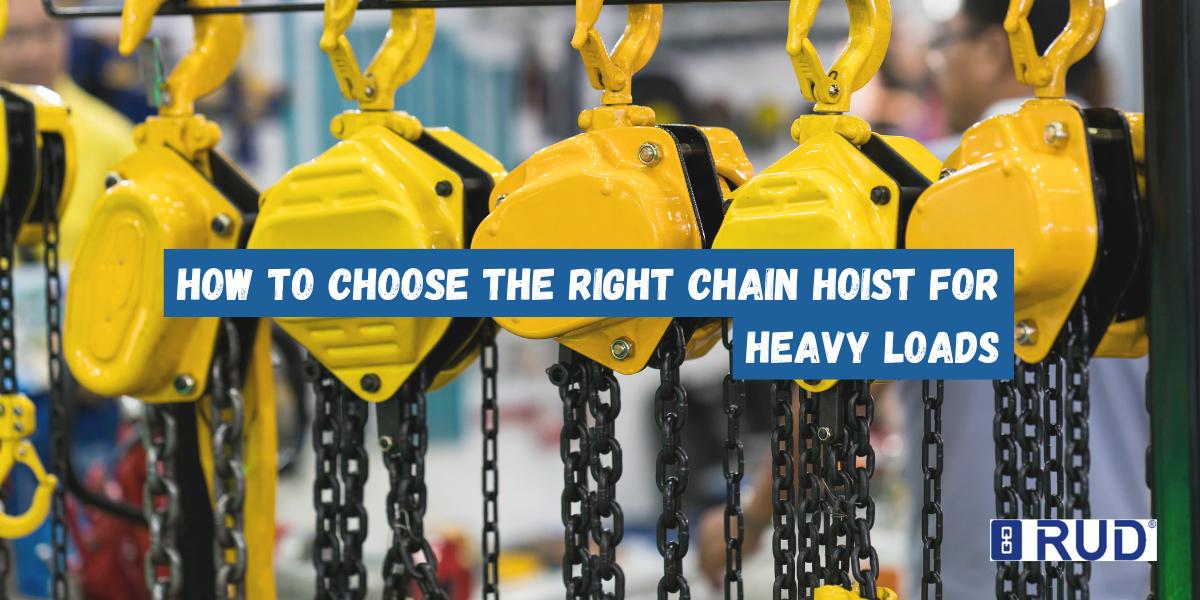
The right chain hoist depends on your load weight, lift height, and how often you’ll use it. If you choose the lifting equipment without considering these things, it will lead to workplace injuries, damaged goods, and compliance headaches.
Industrial operations in Brisbane and Queensland rely on high-quality lifting equipment from suppliers like https://www.rud.com.au to keep workers safe and production moving. As a result, modern chain hoists are built to suit jobs ranging from small workshop lifts to demanding mining sites.
Now, you might be wondering how to narrow down your options. Well, this guide covers load capacity requirements, component specifications, and industry-specific applications. So that you’ll learn which lifting solutions match your operational needs and safety standards.
What Makes a Chain Hoist Right for Your Operation?
Your operation needs a hoist matching your heaviest loads, available power sources, and work environment conditions. Getting this wrong means equipment failure, injured workers, and production delays.
Generally, three factors determine if lifting equipment suits your site. And here they are:
Load Capacity and Weight Limits
Chain hoists usually range from 250 kg to 50 tonnes, depending on your industrial application needs. If you overload it, accidents may happen automatically (and yes, we’ve seen that investigation paperwork pile up).
That’s why, to prevent these accidents, learn how different capacity ranges match different industrial work:
| Capacity Range | Typical Use | Safe Working Load Factor |
| 250 kg – 1 tonne | Workshop maintenance, light assembly | 4:1 minimum |
| 1-5 tonnes | Manufacturing, general industrial lifting | 5:1 minimum |
| 5-50 tonnes | Mining, heavy construction, defence projects | 6:1 or higher |
Verdict: Always size up one capacity level if your loads shift or swing during position changes. That’s because safe working load must account for dynamic forces like swinging loads or sudden stops.
For instance, a 2-tonne hoist might handle static weight fine, but add momentum from a moving load, causing chain failure.
Lift Height and Working Environment
Standard lift heights range from 3 to 12 metres, but custom lengths are available for unusual applications. However, most Brisbane manufacturing facilities work within the 6-metre range for overhead beam systems.
Besides, corrosive environments like mining sites need stainless steel or galvanised chain components for longevity. It’s because salt air near the Port of Brisbane wharves eats through standard steel chains within months.
Temperature extremes also affect chain strength, so verify your hoist handles Brisbane’s humidity or outback heat before ordering.
Manual vs Electric Chain Hoists
Manual hoists work well for occasional lifting under 1 tonne in workshops or maintenance areas. Meanwhile, electric models handle repetitive lifts faster and reduce worker fatigue in production environments.
This comparison often shows how each type works in different settings:
| Manual Chain Hoists | Electric Chain Hoists |
| Lower upfront cost | Higher initial investment |
| No power source needed | Requires an electrical hookup |
| Slower lifting speed | Variable speed control |
| Best for occasional use | Built for continuous operation |
| Operator fatigue on heavy loads | Reduced physical strain |
In short, power source availability determines your choice between electric or hand-operated systems. If your site lacks reliable electricity, manual options keep production moving during outages.
Chain Hoist Components and Australian Safety Standards
The best part about understanding hoist components is knowing exactly what keeps your workers safe during every lift.

Among all the parts, these five components form the foundation of quality lifting equipment:
- Load Chain: The lifting chain connects directly to the hook and bears the full weight during operations. This component takes the most stress across industrial sites and warehouses.
- Brake System: Automatic brakes prevent load drift and hold the weight securely when operators release the control mechanism between lifts. Without this, loads would drop the moment you let go.
- Hook and Swivel Assembly: Load stability is maintained during position changes through 360-degree rotation capability. Mostly, manufacturing facilities and construction sites rely on this for precise placement work.
- Lifting Medium: Grade 80 or Grade 100 alloy steel chains meet different load requirements for various applications. Its higher grades suit mining and defence projects with heavier demands.
- Frame and Housing: The external casing protects internal components while supporting the lifting mechanism during continuous operation. These are designed to handle impact and environmental exposure.
To be more specific, the Grade 100 chain offers higher strength-to-weight ratios for heavy industrial work. Its tighter links handle more stress before showing wear on the job.
During the manufacturing and design of those components, Australian operations must follow AS 1418.2 standards. These regulations align with international standards while addressing workplace safety conditions. And conduct regular inspections under WorkSafe guidelines to prevent component wear.
This way, products meeting Australian and international standards ensure your team operates safely.
Manual Handling Injuries: Why the Right Hoist Selection is Significant
The right hoist selection is significant because it eliminates the manual lifting, causing back strains, crushed hands, and shoulder injuries.

Generally, manual handling injuries cost Australian businesses millions annually in compensation claims and lost productivity. That’s why understanding the safety components becomes your next priority.
Common Workplace Lifting Injuries
Drawing from our experience in Brisbane’s industrial sector, we’ve seen back injuries sideline experienced workers for months.
These are the injuries manual handling creates in warehouses and factories:
- Back Strains: Repetitive manual lifting accounts for 30% of workplace compensation claims across Australia’s industrial sites and logistics operations.
- Crushed Hands and Fingers: Workers guiding heavy items without proper control systems risk serious hand injuries (that’s a risk no operation should accept).
- Shoulder Injuries: Overhead lifting without mechanical assistance damages rotator cuffs and shoulder joints over time in manufacturing environments.
- Leg and Foot Injuries: Dropped loads cause fractures and crush injuries when manual handling goes wrong during transport tasks.
To prevent such injuries, organisations like SafeWork NSW recommend mechanical assistance for any items over 20 kg to effectively reduce these injury risks.
How Industrial Lifting Gear Reduces Risk
Among industrial lifting gear, chain hoists naturally eliminate manual lifting for items over 20 kg as recommended by SafeWork authorities. Plus, its controlled load movement through chain mechanisms prevents sudden drops and causes foot or leg injuries during transport operations.
With these advantages, workers can focus on guiding rather than bearing weight, which reduces musculoskeletal disorders over time.
That’s how proper lifting equipment cuts manual handling injuries by 60-70% in warehouses and manufacturing facilities. Besides, the safety benefits also extend beyond injury prevention to improved efficiency and reduced worker fatigue across shifts.
Selecting Chain Hoists for Specific Industrial Applications
Different industries face unique lifting challenges requiring specific chain hoist features and configurations. For this reason, what works in a manufacturing facility won’t suit mining operations or warehousing environments.
From there, the focus shifts to matching hoists with your specific industry needs.
Manufacturing and Assembly Lines
Production lines need electric chain hoists with variable speed control for component positioning during assembly tasks. Based on our work with local manufacturers, electric hoists with variable speed cut assembly time by 30-40% compared to manual options.
On the flip side, compact low-headroom models fit tight spaces between machinery in Brisbane or Ipswich manufacturing facilities where ceiling height limits equipment choices.
Pendant controls, besides, allow workers to operate safely away from the load during repetitive lifting cycles. These efficiency gains add up fast when you’re moving components hundreds of times per shift across production lines.
Mining and Heavy Industry Operations
Believe it or not, some mining operations run hoists 24/7 for months without stopping. These applications demand equipment built differently from standard industrial lifting products.
The following features suit harsh mining conditions in Australia:
- Explosion-Proof Design: Underground mining where flammable gases exist requires ATEX-rated equipment compliance for safe operation in defence and mining sectors.
- Heavy-Duty Construction: Reinforced frames with sealed components handle continuous operation in remote mine sites across harsh outback conditions.
- Corrosion Resistance: Anti-corrosion treatments and stainless steel chains extend equipment life in wet or chemically aggressive mining environments.
- High Load Capacity: Mining applications often need a 10-50 tonne capacity range for moving heavy machinery parts and ore transport vehicles.
Suggestion: Match your hoist rating to the harshest conditions your site experiences, not average conditions, to ensure reliability.
Warehousing with Pallet Trucks and Overhead Systems
Chain hoists work alongside pallet trucks to move goods vertically in distribution centres near the Port of Brisbane and logistics hubs. Meanwhile, trolley-mounted hoists travel along overhead beams to cover wider work areas in warehouse operations without repositioning equipment.
This way, multiple units can operate simultaneously during busy shifts without interfering with ground-level material handling equipment (we’ve all seen what happens when lifting equipment becomes a bottleneck).
The combination of hoists and pallet trucks also creates efficient vertical and horizontal transport solutions for warehousing needs. These systems suit distribution centres handling construction materials, defence supplies, or general freight across Australia.
Get the Right Chain Hoist with Fast Delivery
Choosing the right lifting equipment starts with matching load capacity, lift height, and how often you’ll use it. The range of products available ensures you’ll find solutions for manufacturing, mining, construction, or warehousing needs across Australia.
Remember, high-quality lifting equipment reduces manual handling injuries, improves productivity, and meets safety standards. Plus, the right choice keeps your team safe and operations running efficiently.
Ready to explore lifting solutions with fast delivery? RUD Australia offers chain hoists and lifting products built to Australian and international standards.
Check our range to find equipment matching your project needs, or contact our team for guidance on the right options.