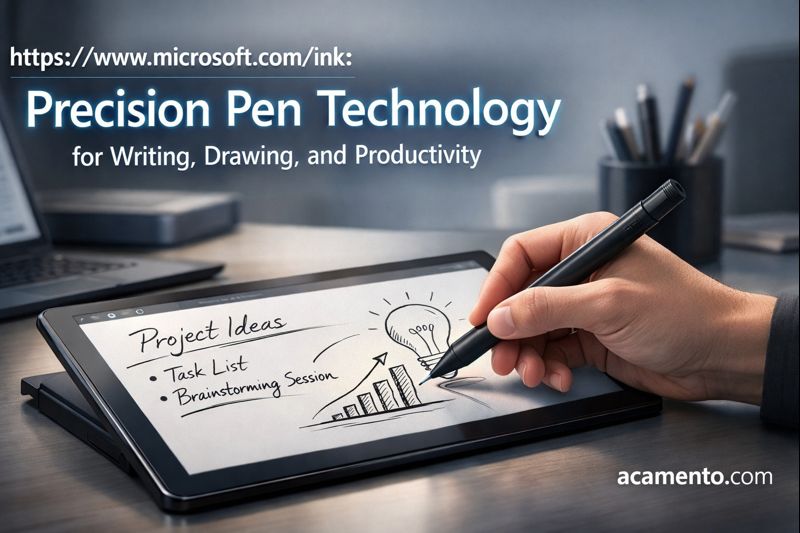
In a world where digital interaction is becoming more personal and expressive, pen-based computing has emerged as one of the most natural ways to work with technology. https://www.microsoft.com/ink represents a deliberate shift away from purely keyboard-and-mouse interaction toward a more human-centered approach that values handwriting, sketching, and freeform thinking. Built directly into the Windows ecosystem, Microsoft Ink enables users to write, draw, annotate, and interact with content in ways that feel intuitive and familiar, while still benefiting from the power and flexibility of digital tools.
Rather than attempting to replace traditional writing or drawing methods, Microsoft Ink enhances them. It allows users to retain the comfort of pen and paper while gaining the advantages of digital storage, searchability, and integration across applications. This balance between familiarity and innovation is what makes Microsoft Ink a meaningful evolution in modern computing.
Understanding https://www.microsoft.com/ink and Its Core Purpose
Microsoft Ink is a digital inking platform designed to capture pen and stylus input with a high degree of accuracy and realism. It records strokes as dynamic data rather than static images, allowing the system to understand how something was written or drawn, not just what it looks like. Each stroke contains information about direction, speed, pressure, and shape, enabling a much richer interaction than standard touch input.
The core purpose of Microsoft Ink is to make digital devices feel more responsive to human expression. Writing with a pen is often faster, more expressive, and more natural than typing, especially when capturing ideas, sketching concepts, or annotating documents. Microsoft Ink recognizes this and provides a framework that supports creativity, productivity, and clarity across a wide range of tasks.
Evolution of Pen-Based Computing in Windows
Microsoft’s investment in pen technology is not new. Early efforts in pen computing laid the groundwork for today’s advanced inking experience. Over time, improvements in touchscreen accuracy, stylus hardware, and software intelligence have allowed Microsoft Ink to evolve into a robust system capable of handling complex input with minimal latency.
This evolution reflects a broader understanding of how people think and work. Many ideas begin as rough sketches or handwritten notes, not structured text. By supporting these early stages of thinking, Microsoft Ink helps users move smoothly from concept to completion without forcing them into rigid workflows.
Precision and Natural Writing Experience
One of the defining characteristics of Microsoft Ink is its emphasis on precision. The system is designed to closely mimic the feel of writing or drawing on paper, responding instantly to subtle changes in pressure and movement. Light strokes appear thin and delicate, while heavier pressure produces bold, expressive lines. Tilt recognition allows shading and calligraphic effects, giving users a level of control that feels organic rather than mechanical.
This attention to detail is especially important for users who rely on handwriting or drawing as a primary mode of expression. Whether taking notes during a meeting or sketching out a design idea, the experience feels fluid and responsive, reducing the mental gap between intention and execution.
Handwriting Recognition and Intelligent Conversion
Beyond capturing strokes, Microsoft Ink adds intelligence to handwritten input. Handwriting recognition allows users to convert written notes into digital text without losing the original ink. This makes handwritten content searchable, editable, and easy to organize, blending the freedom of handwriting with the structure of typed text.
This capability is particularly valuable in productivity-focused environments. Notes taken by hand can later be refined, shared, or archived without retyping. The system adapts to different writing styles over time, improving accuracy and reducing friction for users who rely heavily on handwritten input.
https://www.microsoft.com/ink Workspace and Accessibility
The Microsoft Ink Workspace serves as a centralized area where users can access inking tools quickly and efficiently. Designed for convenience, it allows users to start writing or drawing immediately, without navigating through complex menus. This instant accessibility encourages spontaneous creativity and quick note-taking, which are often lost when tools feel cumbersome or slow to access.
Accessibility is another important aspect of Microsoft Ink. By supporting diverse writing styles and offering adjustable settings, the platform accommodates users with different needs and preferences. This inclusive approach ensures that digital inking is not limited to a narrow group of users but is available to anyone who benefits from pen-based interaction.
Enhancing Productivity Through Digital Ink
Microsoft Ink is not limited to creative use cases; it plays a significant role in everyday productivity. Annotating documents, highlighting key information, and marking up presentations become more intuitive when users can interact directly with content. This direct engagement often leads to better understanding and more effective communication.
In professional environments, digital ink supports collaborative workflows by making feedback clearer and more personal. Instead of typing long explanations, users can circle, underline, or sketch directly on documents, conveying ideas quickly and accurately. This approach saves time while reducing misunderstandings.
Creative Expression and Visual Thinking
For creatives and visual thinkers, Microsoft Ink offers a digital canvas that encourages exploration and experimentation. Sketching ideas, mapping concepts, and visual brainstorming become natural extensions of the thinking process. Because ink strokes are digital, users can easily revise, duplicate, or expand their work without starting over.
This flexibility supports iterative creativity, where ideas evolve through multiple stages. Artists, designers, and planners can move freely between rough sketches and refined concepts, using the same tools throughout the process. The result is a workflow that supports creativity without imposing unnecessary constraints.
Integration Across the Windows Ecosystem
A key strength of Microsoft Ink lies in its deep integration with the Windows operating system. Ink functionality is consistent across compatible applications, creating a unified experience that feels cohesive rather than fragmented. Users do not need to relearn tools for different tasks; the same inking principles apply whether they are writing notes, annotating documents, or sketching ideas.
This integration ensures that digital ink becomes a natural part of everyday computing rather than a specialized feature used only in certain contexts. Over time, users begin to rely on pen input as a standard interaction method, alongside typing and touch.
Educational and Professional Applications
In educational settings, Microsoft Ink supports diverse learning styles by allowing students to write equations, draw diagrams, and annotate material directly. This approach mirrors traditional learning methods while offering the organizational benefits of digital tools. Teachers can also provide handwritten feedback that feels more personal and engaging than typed comments.
Professionals across industries benefit from the ability to capture ideas quickly and visually. From planning sessions to technical diagrams, digital ink allows concepts to be expressed clearly and shared easily. This versatility makes Microsoft Ink valuable in fields where clarity and creativity are equally important.
Hardware Compatibility and User Experience
While Microsoft Ink is software-driven, its effectiveness is closely tied to compatible hardware. Devices that support pen input, such as touchscreen laptops and tablets, allow users to fully experience the platform’s capabilities. High-quality stylus support ensures accurate input, minimal latency, and a comfortable writing experience.
The combination of responsive hardware and intelligent software creates a user experience that feels natural and dependable. Users can trust that their input will be captured accurately, allowing them to focus on their work rather than the tool itself.
The Future of Digital Inking
As digital interaction continues to evolve, the role of pen-based input is likely to expand. Advances in artificial intelligence and pattern recognition may further enhance handwriting interpretation, shape recognition, and contextual understanding. These developments could make digital ink an even more powerful bridge between human expression and digital systems.
Microsoft Ink is positioned as a foundation for this future, supporting new ways of thinking, collaborating, and creating. By prioritizing natural interaction, it reflects a broader shift toward technology that adapts to people, rather than forcing people to adapt to technology.
Conclusion
Microsoft Ink represents a thoughtful approach to digital interaction, combining the familiarity of pen and paper with the advantages of modern computing. Through precision input, intelligent recognition, and seamless integration, it supports a wide range of creative and productive tasks. Rather than replacing traditional methods, Microsoft Ink enhances them, offering users a flexible and intuitive way to work with ideas in digital form.
As writing, drawing, and visual thinking continue to play a vital role in how people communicate and create, Microsoft Ink stands as a practical and forward-looking solution. It demonstrates that technology can be both powerful and human-centered, enabling users to express themselves naturally while staying connected to the digital world.
Read More: Acamento